Why the Wood 3D Text Effect Is Reshaping Visual Storytelling for Creators and Brands
In an era dominated by sleek digital minimalism and hyper-realistic renders, a quieter but powerful trend is emerging across design, marketing, and content creation: the Wood 3d Text Effect. This technique combines the warmth and tactility of natural wood grain with the dimensionality of three-dimensional typography, creating visuals that feel both handcrafted and technologically advanced. For professionals, creators, and entrepreneurs, understanding this effect isn't just about adding another tool to the design toolbox—it's about recognizing a shift in how audiences engage with visual content in a world saturated with flat, synthetic imagery.
The Anatomy of the Wood 3D Text Effect
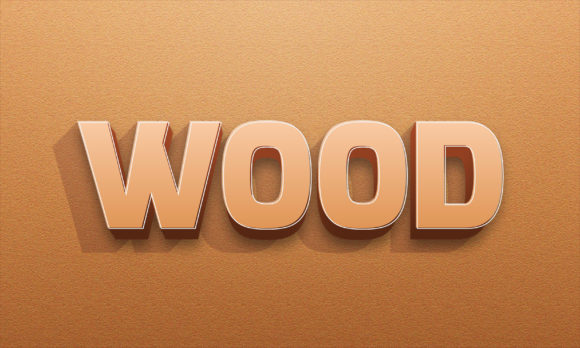
At its core, the Wood 3d Text Effect is a rendering technique that applies realistic wood textures—complete with grain, knots, color variations, and surface imperfections—to three-dimensional letterforms. Unlike simple wooden textures applied to flat text, the 3D aspect introduces depth, bevels, extrusions, and lighting interactions that make the typography appear carved, sculpted, or constructed from actual lumber. The result is a hybrid aesthetic: digital precision fused with organic materiality.
What sets this effect apart from standard 3D typography is the behavior of the wood grain. A well-executed Wood 3d Text Effect ensures that the grain flows naturally along the contours of each letter, responding to curves, angles, and extrusions as if the text were physically carved from a block of wood. This attention to material authenticity is what elevates the effect from a simple texture map to a convincing visual experience.
Technical Foundations and Creative Tools
Modern software ecosystems have made the Wood 3d Text Effect accessible to a wider range of creators. Tools like Adobe Photoshop, Illustrator, Blender, Cinema 4D, and specialized 3D typography plugins offer procedural wood generation, UV mapping controls, and real-time rendering previews. For professionals, the workflow typically involves:
- Base 3D geometry creation—extruding text, defining bevel profiles, and setting extrusion depth to mimic carved or layered wood construction.
- Wood texture selection or generation—using high-resolution scans of real wood, procedurally generated grain, or hybrid approaches that combine both for maximum realism.
- UV mapping and grain direction—aligning the wood texture to follow the natural contours of each letterform, often requiring manual adjustment for curved strokes and serifs.
- Lighting and environment setup—positioning virtual lights to highlight the wood's grain, subsurface scattering, and surface reflections, creating a tactile, almost touchable appearance.
- Post-processing—adding subtle wear, edge highlights, or shadow gradients that reinforce the illusion of a physical wooden object.
This technical stack allows creators to produce outputs that range from photorealistic signage mockups to stylized, illustrative typography that retains the warmth and organic variation of natural wood.
Why the Market Is Moving Toward Material Authenticity
The growing interest in the Wood 3d Text Effect reflects a broader cultural and consumer shift toward authenticity and craftsmanship. After years of flat design, glassmorphism, and neon gradients dominating visual culture, audiences are responding to materials that feel real, imperfect, and human. Wood, as a material, carries associations with sustainability, tradition, warmth, and durability—qualities that brands and creators are eager to associate with their messaging.
For entrepreneurs and marketers, the Wood 3d Text Effect offers a way to differentiate in crowded digital spaces. A real estate brand using carved wooden typography for property titles, a craft brewery employing it for label designs, or a sustainability consultancy incorporating it into presentations—each application signals a commitment to quality and a respect for natural materials. The effect creates an immediate tactile impression even on a screen, inviting viewers to linger longer on the visual.
Freelancers and creators are also finding that the Wood 3d Text Effect commands higher perceived value in their portfolios and client deliverables. A logo, social media graphic, or video title sequence built with this technique conveys a level of detail and art direction that generic 3D text cannot. Clients perceive it as bespoke, handcrafted work, which can justify premium pricing and strengthen long-term relationships.
Changing Workflows in a Remote and Distributed Creative Economy
As creative workflows become increasingly remote, collaborative, and fast-paced, the Wood 3d Text Effect fits neatly into the demand for reusable, customizable assets. Designers are building libraries of wood texture presets, 3D text templates, and procedural grain generators that can be adapted across projects without starting from scratch. This modular approach allows for consistency across brand touchpoints while still delivering the bespoke look that clients expect.
Moreover, the rise of no-code and low-code design tools has made it possible for non-designers—entrepreneurs, small business owners, content marketers—to apply wood 3D effects to their own materials. Platforms like Canva, Vectary, and even some AI-assisted design tools now include wood 3D text options, democratizing access to a technique that once required advanced 3D modeling skills. While professional-grade results still demand expertise, the barrier to entry has lowered significantly, expanding the effect's adoption across industries.
Practical Applications Across Industries
The versatility of the Wood 3d Text Effect makes it relevant across a broad spectrum of use cases, each leveraging different aspects of the aesthetic.
Brand Identity and Logo Design
Wooden 3D typography is particularly effective for brands in the food and beverage, hospitality, outdoor, artisan, and wellness sectors. A logo rendered in carved oak or walnut immediately communicates tradition, craftsmanship, and natural origins. For seasonal branding or limited-edition packaging, the effect can be combined with paint, gold leaf, or burnt wood variations to create unique tactile stories.
Observation: Brands that adopt the Wood 3d Text Effect for their primary logo often pair it with earthy color palettes, organic shapes, and serif or slab-serif typefaces to reinforce the material narrative. The effect works best when the rest of the visual system supports the handcrafted ethos.
Digital and Print Collateral
In presentations, brochures, and website headers, the Wood 3d Text Effect adds a dimensional anchor that draws attention. A financial services firm might use subtle, dark wood text to convey stability and longevity, while a children's toy brand could use lighter, playful wood textures with visible grain to evoke natural play. The effect bridges the gap between digital fluency and analog warmth, making it suitable for both screen and print applications.
Video, Motion Graphics, and Social Media
In motion contexts, the Wood 3d Text Effect shines when combined with subtle animation—rotations, bevel highlights, or camera orbits that reveal the texture's depth. Social media content, in particular, benefits from the effect's ability to stop the scroll. A wooden 3D headline that slowly rotates or catches light as it moves creates a hypnotic, high-quality impression that encourages engagement and shares.
Practical example: A lifestyle influencer promoting a cabin getaway used wooden 3D text overlay on their video content to highlight location names. The text felt integrated with the surroundings, reinforcing the natural, unplugged experience. Followers responded positively, noting the "warm, inviting" look of the typography.
User Interface and Digital Experiences
While less common, the Wood 3d Text Effect is finding its way into UI elements for specialized applications—nature-focused apps, mindfulness platforms, heritage websites, and digital museum exhibits. When used sparingly and intentionally, it can create memorable, thematic interfaces that stand apart from generic design systems. However, accessibility considerations require careful contrast management and readable type selection, even in 3D contexts.
The Role of Sustainability and Consumer Consciousness
Another layer of relevance for the Wood 3d Text Effect lies in its alignment with sustainability narratives. As consumers become more conscious of environmental impact, visuals that evoke natural materials without exploiting them offer a responsible aesthetic choice. Digital wood textures require no deforestation, no transportation emissions, and no waste. Using this effect allows brands to express environmental values visually, without the ecological footprint of physical wood products.
For marketers and communicators, this is a subtle but powerful message. A digital campaign that features wooden 3D typography can position the brand as mindful of its environmental footprint, especially when paired with transparent sustainability reporting. The effect becomes part of a larger story about responsibility and authenticity.
Observations on Quality and Craftsmanship
Not all Wood 3d Text Effect implementations are created equal. The difference between a convincing execution and a distracting one often comes down to grain direction, texture resolution, and lighting. A common pitfall is applying a wood texture that repeats visibly or runs in unnatural directions across letterforms. Professionals who invest time in UV mapping, grain matching, and lighting setup are rewarded with results that feel tangible and high-end.
Emphasis on context: The Wood 3d Text Effect works best when the surrounding design supports the material illusion. A dark wood text on a bright, minimalist background can feel striking, but pairing it with complementary textures—linen, leather, stone, paper—creates a richer, more immersive visual language. The effect should not exist in isolation; it should participate in a cohesive material palette.
Forward-Looking Relevance Without Speculation
Looking ahead, the principles behind the Wood 3d Text Effect—material authenticity, dimensional depth, and tactile quality—are likely to persist even as design trends evolve. The effect itself may be adapted into virtual and augmented reality contexts, where material realism becomes even more critical for user immersion. For professionals and creators, developing proficiency with material-driven 3D typography now builds a skill set that will remain valuable as spatial computing and mixed reality become more mainstream.
Moreover, the broader movement toward digital craftsmanship suggests that audiences will continue to value visuals that evoke effort, care, and material awareness. The Wood 3d Text Effect is one expression of this larger shift, but the underlying mindset—using technology to simulate and celebrate natural materials—applies across many creative disciplines.
Conclusion: Embracing the Tactile in a Digital World
The Wood 3d Text Effect represents more than a stylistic choice. It is a response to audience fatigue with sterile digital aesthetics, a bridge between the handcrafted and the computational, and a practical tool for differentiation in competitive markets. For professionals, creators, entrepreneurs, marketers, freelancers, and enthusiasts, mastering this effect opens doors to more engaging, memorable, and emotionally resonant visual communication.
Whether you are designing a brand identity, producing social content, building a presentation, or exploring new creative directions, the Wood 3d Text Effect offers a way to bring warmth, depth, and authenticity to your work. By understanding its technical foundations, market relevance, and contextual applications, you can use it not just as a visual trick, but as a meaningful part of your storytelling and strategic communication.
In a digital landscape that often feels flat, wood 3D text gives your message something to hold onto.