The Weekly Planner: Your Quiet Ally in a Chaotic Week
There’s a specific kind of relief that comes when you look at your week and actually see it—not as a blur of obligations, but as a series of manageable moments. That’s what a weekly planner does. It doesn’t promise to fix your life or turn you into a productivity machine. It just gives you a place to put all the stuff floating around in your head so you can breathe a little easier.
A weekly planner is exactly what it sounds like: a tool—physical or digital—that helps you map out your week ahead. But for the people who actually rely on one, it becomes something more. It becomes a quiet ally. It holds your appointments, your to-do lists, your meal plans, your goals, and sometimes even a doodle or two. And it does this without judgment, without notifications, and without asking for anything in return.
When the Week Feels Like a Game of Tetris
Let’s be honest: most adults between 20 and 50 are juggling some version of the same puzzle. Work deadlines, family commitments, side projects, gym sessions, grocery runs, and the occasional attempt at a social life. It’s a lot. And when everything is stored only in your memory, things start to slip. You double-book yourself. You forget to pick up milk. You realize at 10 PM on a Sunday that you have a meeting in the morning you never prepped for.
A weekly planner helps because it externalizes the chaos. Instead of keeping all those details in your head, you put them on paper or into an app. Suddenly, you’re not just reacting to whatever pops up next. You’re seeing the shape of your week before it happens. That alone can shift you from feeling overwhelmed to feeling slightly more in control.
For example, consider a marketing manager in her early thirties. She has client calls, internal check-ins, a presentation to prepare, and a team member’s birthday to coordinate. She uses her weekly planner on Sunday evening to block out her non-negotiables first—sleep, exercise, commute time—and then fits the rest around them. By the time Monday morning rolls around, she’s not guessing what her week looks like. She’s living it.
Different People, Different Planners, Same Need
The beauty of a weekly planner is that it doesn’t prescribe one way of being organized. It adapts to how you actually live. A freelancer might use it to track project milestones and invoice dates. A parent might use it to coordinate school drop-offs, doctor appointments, and date nights. A student might use it to map out study sessions, class schedules, and part-time work shifts. Each of these people is looking at the same seven days, but their planner reflects a totally different reality.
Take a small business owner, for instance. She’s not just managing her own tasks—she’s managing client expectations, inventory, and maybe even a small team. For her, the weekly planner becomes a operational hub. She reserves time each Friday afternoon to review the coming week, allocate tasks, and note any follow-ups. Without that ritual, things fall through the cracks. With it, she can delegate more confidently and actually take a weekend off without anxiety.
Then there’s the creative professional—a writer, a designer, a musician. Their work doesn’t always fit neatly into time blocks. But a weekly planner still helps. It lets them schedule creative sessions during their most productive hours and leave the administrative stuff for when their energy dips. They can also use it to track habits like daily sketching or word counts, which builds momentum over time.
More Than Just Appointments: The Hidden Uses
Most people think of a weekly planner as a place to write down meetings and deadlines. But once you start using one regularly, you discover it can do a lot more. It can hold your priorities for the week, your meal plans, your exercise schedule, your reading list, and even your mood tracker. Some people use it to log what they’re grateful for each day. Others use it to track their water intake or sleep quality.
One of the most practical uses I’ve seen is what I call the “weekly reset.” This is when you use your planner not just to plan the week ahead, but to review the week that just passed. You jot down what worked, what didn’t, and what you want to adjust. It turns the planner into a feedback loop. Over time, you start to notice patterns. Maybe you always overcommit on Wednesdays. Maybe you’re more focused in the morning than the afternoon. That kind of self-awareness is gold, and it comes naturally from using the planner consistently.
For families, a shared weekly planner on the fridge (or a digital one everyone can access) can reduce the “did you remember that?” conversations. Everyone sees what’s coming. Kids know when they have soccer practice. Partners know when you have a late meeting. It lowers the friction of daily coordination.
Before You Pick a Weekly Planner: What to Think About
Not all weekly planners are created equal, and choosing one that actually fits your life matters more than you might think. The first consideration is format. Do you prefer paper or digital? Paper has a tactile appeal and no screen fatigue, but it can’t sync with your calendar or send reminders. Digital planners (apps like Notion, Google Calendar, Todoist, or dedicated planner apps) offer more flexibility and integration, but they come with distractions and the risk of notification overload.
You also need to think about layout. Some weekly planners show the full week on two pages, with each day getting a decent amount of space. Others use a vertical layout with hourly slots. Some are minimal, others are packed with prompts and trackers. There’s no right answer, but there is a right answer for you. If you love structure and habit tracking, a planner with built-in sections for goals, gratitude, and hydration might be your jam. If you just need a place to jot down meetings and to-dos, a minimalist layout will feel less cluttered.
Another factor is portability. If you’re always on the go, a lightweight, A5-sized planner is easier to carry than a bulky binder. If you work primarily from a desk, size matters less. Think about how you’ll actually use it day to day. Will you open it at a coffee shop? During meetings? On the train? That will tell you what size and binding makes sense.
Strengths and Limitations: An Honest Look
A weekly planner shines when your life has a mix of routine and variability. It gives structure to the predictable parts and flexibility for the unexpected. It’s especially useful for people who feel like their week is running them, rather than the other way around. When used consistently, it can reduce decision fatigue because you’re not constantly asking yourself what you should be doing next.
But it’s not magic. A planner can’t make you do the things you don’t want to do. It can’t stop emergencies from happening. And if you’re the kind of person who thrives on spontaneity and hates being boxed in, a rigid planning system might actually feel suffocating. The key is to treat the planner as a guide, not a jailer. Leave empty space. Don’t schedule every hour. Allow for drift.
Another limitation is consistency. A weekly planner only works if you actually use it. It’s easy to start strong in January and then let it gather dust by March. The solution isn’t to force yourself into a system that doesn’t fit—it’s to find a rhythm that feels natural. Maybe you only plan on Sunday evenings and check in each morning. Maybe you don’t use it at all during holidays. That’s fine. The planner works for you, not the other way around.
Practical Scenarios Across Industries
In healthcare, a nurse might use a weekly planner to track shift schedules, continuing education courses, and personal self-care days. In retail, a store manager might use it to plan staff rotations, inventory checks, and promotional events. In tech, a product manager might use it to map out sprint cycles, stakeholder meetings, and user research sessions. In education, a teacher might use it to plan lesson themes, grading deadlines, and parent-teacher conferences.
What’s common across all these scenarios is the need to see the week at a glance. The weekly format gives you that perspective. You can spot conflicts early, adjust before things get messy, and protect your energy for what matters most.
Even for someone in a more fluid role—like a consultant who works with different clients each week—the planner can serve as a boundary-setting tool. By blocking off time for deep work, travel, and recovery, you’re telling yourself (and others) that your time has value. That’s a powerful shift in mindset.
Small Observations That Make a Big Difference
People who use a weekly planner often report feeling less anxious about forgetting things. That’s not just a nice side effect—it’s the core benefit. Anxiety often comes from uncertainty. When you know what’s coming, even if it’s a lot, you can mentally prepare. The planner turns the unknown into the known.
There’s also something quietly satisfying about crossing things off. That small act of completion releases a bit of dopamine. It reinforces the habit of planning. Over weeks and months, that feedback loop builds a sense of progress. You’re not just surviving your week—you’re actively shaping it.
And let’s not overlook the social side. When you share your planner with a partner, roommate, or team, it builds trust. Everyone knows what to expect. It reduces the mental load of constant coordination. That’s worth a lot in any relationship.
The Bottom Line (Without Calling It One)
A weekly planner is a simple tool, but it can have a surprisingly deep impact on how you experience your days. It helps you move from reactive to intentional, from scattered to focused. It doesn’t require a big time investment—just a few minutes each week—and the payoff is a sense of clarity that carries into everything you do.
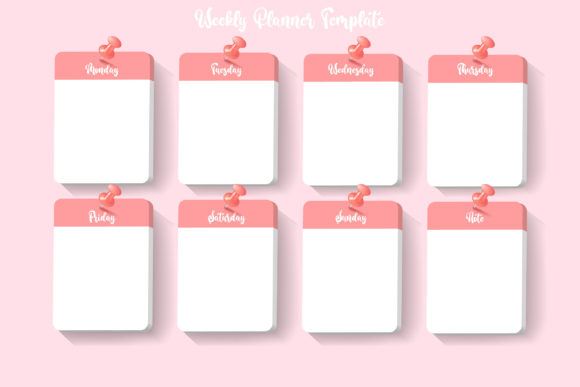
Whether you choose a leather-bound notebook, a digital app, or a printable template from the internet, what matters is that you find a way to hold your week in your hands and say, “I see you. I’ve got this.” And then go live it.